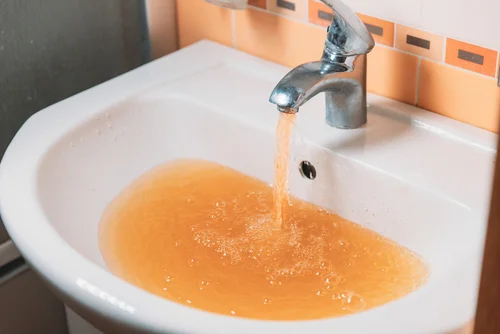
You turn on the faucet and see the water come out brown, orange, or red. It's alarming, and your first instinct is probably to wonder if it's safe to use. The good news is that you don't have to guess, and in most cases, a few simple checks will help you identify the source.
Rusty water in homes usually comes from one of three sources: the city supply line, your water heater, or the pipes inside your house. Identifying which one is causing the issue changes how you handle it.
Discolored water in your home? Contact us at (214) 817-3755 to schedule a diagnostic with DNA Plumbing Heating and Air.
Step 1: Check Whether the Problem Is with the City
First, run your cold water only at an outdoor hose bib or a tap you don't usually use. If the water clears up after a minute or two, the problem is probably a temporary disturbance in the city’s main, often caused by nearby construction, a water main break, or scheduled flushing. In that case, let your cold tap run for several minutes, and the discoloration should go away.
You can also check with the City of Plano Customer and Utility Services to see if they have flagged any active work in your area. If the entire neighborhood is affected, the source is upstream of your home.
Signs that the city supply is the culprit:
- Rusty water at every cold tap – The problem shows up consistently across your home on cold-only runs
- Clears within a few minutes of running water – City disturbances are usually temporary and settle quickly
- Neighbors are experiencing the same thing – A call to neighbors or a check of your local utility page confirms a shared source
If the city is the source, our team is happy to guide you through the confirmation steps and make sure that the issue is fully resolved before we close out.
Step 2: Isolate Whether Your Water Heater Is the Problem
If your cold water runs clear but your hot water appears rusty or discolored, the most likely cause is your water heater. Sediment buildup inside the tank, especially in older units, causes rust and corrosion that usually show up first at the hot tap.
Run this quick test:
- Turn on a cold-only tap and let it run for 30 seconds. Note the color.
- Turn on a hot-only tap and let it run for 30 seconds. Note the color.
- If only the hot side runs discolored, your water heater is the source.
Water heaters have an anode rod designed to attract corrosion and protect the tank lining. When the rod is depleted, rust forms inside the tank and can enter your hot water supply. If your unit is over 8 to 10 years old and has never had the anode rod replaced or the tank flushed, that is usually the main cause. Our technicians check the condition of the anode rod and the tank interior during a water heater diagnosis, so you get a clear answer, not a guess.
Step 3: Check Your Home's Pipes
If rusty water appears on both hot and cold sides and the city supply tests clear, the pipes themselves may be corroding from the inside. Older galvanized steel pipes are especially susceptible to rust as the protective zinc lining wears away over decades of use.
Common pipe-related clues include:
- Discoloration only at specific fixtures – One bathroom runs rusty but others do not, suggesting a localized pipe section
- Flaky or gritty texture to the water – Rust particles from the pipe interior are breaking off into the flow
- Reduced water pressure alongside discoloration – Heavy rust buildup narrows the pipe diameter
Our technicians use targeted diagnostics to determine whether the issue is isolated or part of a larger corrosion pattern, then walk you through repair or repiping options based on their findings.
When to Call a Plumber Right Away
If you cannot determine the source using these steps, if the discoloration persists after the city addresses it, or if the water has an odor or a metallic taste, do not use it for cooking or drinking until a professional assessment is made. Chronic rust from failing pipes is not just a cosmetic issue; it indicates ongoing infrastructure deterioration.
Rusty water often seems like a mystery until you identify the source. Check cold vs. hot water, compare notes with your neighbors, and observe which fixtures are affected. These three points usually reveal what you need to know. If the issue points to your water heater or pipes, our team at DNA Plumbing Heating and Air is ready to confirm the diagnosis and guide you through your options with upfront pricing and no surprises.
Ready to find the source? Call (214) 817-3755 or schedule online. Our team serves Plano, TX, and surrounding communities with same-day availability.