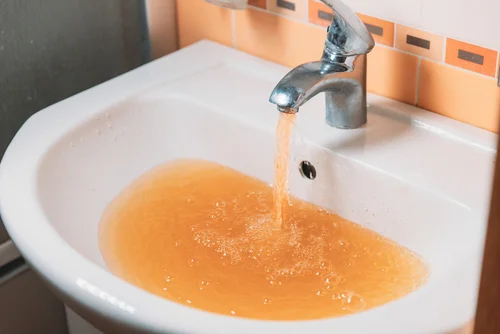
Dallas and Fort Worth draw on a network of open-surface lakes and reservoirs across North Texas. Before treatment, water from those sources picks up what's in the surrounding watershed: sediment, agricultural runoff, and residues from whatever is on the land around each lake. Both cities disinfect with monochloramines, a chlorine-ammonia compound that stays active in distribution pipes longer than free chlorine. Atrazine, a herbicide used on row crops near those lake watersheds, shows up at trace levels in both cities' 2025 water quality reports. Hardness runs moderate to hard depending on which district supplies your home.
This post doesn't name one system the best. It compares four systems: two whole-house multi-stage options, one single-stage whole-house carbon filter, and one under-sink reverse osmosis system. Each section explains what that system handles and what situation it fits, so you have the information to match a system to your home.
To talk through your home's water quality before committing to a system, call DNA Plumbing Heating and Air at (214) 817-3755 or message us online.
What's in DFW's Tap Water
The area's drinking water meets all federal and state standards. That's the starting point, not a sign there's nothing worth filtering, but context for understanding where detected compounds fall relative to regulatory limits.
Both cities use monochloramine disinfection as standard practice, and both report residuals in the 3 ppm range. The 2025 water quality reports document average chlorine residuals of 2.97 ppm for one district and 3.3 ppm for the other. Utilities serving surface-lake sources add monochloramine because it remains chemically stable during long-distance distribution, unlike free chlorine, which dissipates. That stability is also what makes chloramines harder to remove than free chlorine, which is why standard carbon filtration, a reliable choice in groundwater markets, performs differently here.
Atrazine was detected at 0.1 ppb in both cities' reports. The EPA's maximum contaminant level is 3 ppb, so these readings are well within limits. Atrazine is present because of the agricultural land surrounding these open lake sources, and not all filter media removes it effectively.
The area's water has a total hardness between 108 and 150 ppm, which is 6 to 9 grains per gallon. Total trihalomethanes and haloacetic acids (disinfection byproducts formed when chlorine reacts with organic material) were detected in both cities at levels well below EPA limits. Lead at trace levels and arsenic below 1.1 ppb were also reported in this area's 2025 data. All within limits, and all worth knowing when you're choosing what to filter.
A Filter and a Softener Solve Different Problems
These two systems are not interchangeable, and the water chemistry in this area is a common reason people confuse them. A softener targets hardness minerals, specifically calcium and magnesium, through an ion exchange process. A filtration system targets contaminants such as chloramines, herbicide residues, sediment, disinfection byproducts, and dissolved solids. One won't do the job of the other.
If your home has both hard water and chloramine chemistry worth addressing, both types of systems might belong in the same conversation.
Filtration systems fall into two categories. Whole-house systems install at the main water line and treat every drop entering the home. Point-of-use systems install at a single outlet, usually the kitchen sink or refrigerator line, and treat water at that fixture only. Whole-house treatment protects pipes, appliances, and every faucet in the house. Point-of-use treatment concentrates filtration where it matters most for drinking and cooking.
Neither category is automatically the right call. The answer depends on what you're trying to address and whether treating the whole home or the drinking supply alone fits your goals and budget.
Four Systems Worth Comparing
The following four systems represent different approaches to filtration. Each handles a distinct combination of contaminants, installs differently, and fits a different household situation.
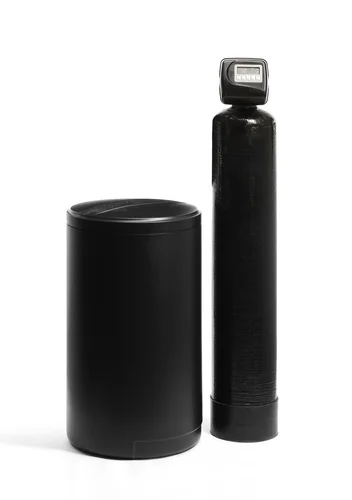
Pentair Whole-House Carbon Filter
Pentair's whole-house carbon filtration system installs at the main water line and treats all water entering the home before it reaches any fixture. The system is NSF-certified for the compounds it addresses, including chlorine, volatile organic compounds (VOCs), sediment, and taste and odor. Large-format carbon housing supports high flow rates, which keep pressure consistent throughout the house.
If chloramine removal is your primary concern, confirm whether the specific model you're considering uses standard carbon or catalytic carbon media. Standard carbon and catalytic carbon perform differently with monochloramines, and the difference matters in this area's water. The single-stage design keeps installation and maintenance straightforward.
A Pentair whole-house carbon filter might be a good fit if you're looking for a simple, high-flow whole-house solution focused on sediment reduction, VOC removal, and taste and odor improvement, and chloramine removal isn't your primary concern.
HALO 5-Stage System
The HALO 5 moves water through five media layers: granular activated carbon, high-activity carbon, filter-AG Plus, high-density garnet filter media, and a HALO ION inline conditioner. Each layer addresses a specific category of compounds. The high-activity carbon stage is designed for monochloramine removal, placing this system in a different performance class than single-stage carbon filters for the chemistry found in this area's water.
The HALO 5 requires no salt and no brine tank. It conditions water and filters it through the five-stage sequence without regeneration cycles. The 10-year warranty covers the full system.
A HALO 5-Stage system might be a good fit if you're looking for a whole-house multi-stage filter with a dedicated chloramine-removal stage and no ongoing salt maintenance.
APEC Ultimate RO-90
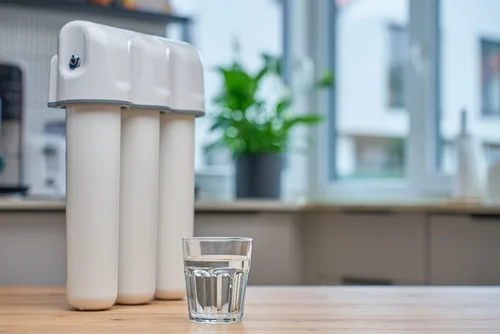
The APEC RO-90 is a 5-stage under-sink reverse osmosis system. Water passes through a sediment pre-filter, two carbon block filters, an RO membrane, and an inline carbon post-filter before reaching the dispenser. The RO membrane removes dissolved solids by forcing water through a semi-permeable barrier that blocks chloramines, atrazine, disinfection byproducts, lead, arsenic, and fluoride. The system is rated at 90 gallons per day, stores filtered water in a 3.2-gallon under-sink tank, and carries WQA Gold Seal certification.
The tradeoff is scope. An under-sink RO treats water at one fixture. It won't filter water flowing to your water heater, through your shower, or out of any faucet except the one it's connected to. The RO process also produces reject water (water that passes through the system without crossing the membrane), which is a real tradeoff if water efficiency matters alongside filtration performance.
An APEC RO-90 might be a good fit if you're looking for the highest level of contaminant removal at a single fixture for drinking and cooking, and whole-house treatment isn't your priority.
iSpring WGB32B 3-Stage Big Blue
The iSpring WGB32B passes water through three stages in a Big Blue housing. Stage 1 is a 5-micron polypropylene sediment filter. Stages 2 and 3 each use a CTO (chlorine, taste, and odor) carbon block filter. The 1-inch port connection supports flow rates up to 15 gallons per minute. Rated capacity is 100,000 gallons.
CTO carbon block media is designed for free chlorine reduction. In chloramine-treated water, CTO carbon performs below the level of catalytic or high-activity carbon. The three-stage design gives this system an advantage over single-stage whole-house filters for reducing sediment and organic compounds, while keeping flow rates high. It's a capable system, designed to operate. It has a specific limitation worth naming for homes in this area.
An iSpring WGB32B might be a good fit if you're looking for a multi-stage whole-house filter that handles sediment, chlorine, and organic compound reduction at a lower price point, and monochloramine removal isn't your primary concern.
What to Know Before Installation
Whole-house systems mount at the main water line and require shutoff access, a bypass valve, and sizing that matches the home's pipe diameter and flow requirements. An improperly sized system creates pressure drops across every fixture in the house. A bypass valve that fails during maintenance means a water shutoff until it's corrected. A licensed plumber handles sizing, bypass configuration, and the fitting work at the main line. They verify the system won't restrict flow before the water goes back on.
Under-sink RO systems like the APEC are designed for homeowner installation at a single fixture. Proper drain saddle placement, a dedicated faucet opening, and a secure tank connection matter for long-term performance. The installation instructions are detailed, and the process is more forgiving than main-line work.
Filter replacement follows the manufacturer's capacity rating, not the water’s taste. A filter past its rated capacity still passes water. You won't necessarily notice a performance difference, which is why setting a reminder based on the rated interval, gallons or months per the manufacturer's schedule, matters more than waiting for a sensory signal.
Which System Fits Your Home
This area's water profile creates a specific context for comparing filtration systems: monochloramine disinfection, trace herbicide residues from open-surface watershed sources, and moderate-to-hard hardness levels. These four systems each have a reasonable case. A single-stage carbon filter is simpler and less expensive but has a real limitation in chloramine-treated water. A multi-stage system like the HALO 5 addresses that limitation at a higher price and with more installation space required. An under-sink RO provides the highest contaminant removal at a single fixture without treating the rest of the home. A three-stage Big Blue sits in between, offering more filtration stages than a single-stage system without the price of a premium whole-house unit.
DNA Plumbing Heating and Air installs and services whole-house filtration and under-sink RO systems across North DFW. When we come out, we look at what's already in place, what your water contains, and what each system addresses before recommending anything. We match the system to the problem, not the other way around.
For water filtration installation in North DFW, call us at (214) 817-3755 or reach out online.